What Scientists Just FOUND Beneath Jesus’ Tomb in Jerusalem Will Leave You Speechless
Guardians of Faith and History
For centuries, the Church of the Holy Sepulchre in Jerusalem has stood at the heart of Christian faith, revered as the site of Jesus Christ’s crucifixion, burial, and resurrection.
Generations of pilgrims have prayed within its walls, guided as much by tradition as by belief. Yet beneath the worn stone floors and centuries of architecture, the site quietly guarded its deeper history—one that is physical, layered, and remarkably consistent with ancient texts.
Recent archaeological and conservation projects have begun to peel back that history, revealing discoveries that are not merely symbolic but tangible evidence of a first-century landscape.
The Edicule: Unlocking Centuries
The most significant breakthrough came during a major restoration project in the mid-2010s, when specialists were granted rare access to the Edicule—the shrine enclosing the tomb traditionally identified as Jesus’ burial place.
For centuries, marble slabs had sealed the interior, protecting it from damage. Scholars long assumed that repeated fires, invasions, and reconstructions had destroyed the original rock surface described in early Christian sources.




In October 2016, a multidisciplinary team led by the National Technical University of Athens carefully removed the marble covering for the first time in centuries. Beneath it lay an intact limestone burial bed, cut directly into the rock.
The discovery astounded researchers. Despite nearly two millennia of upheaval—including Roman reconstruction, medieval destruction, and modern restoration—the core geological feature of the tomb had survived.
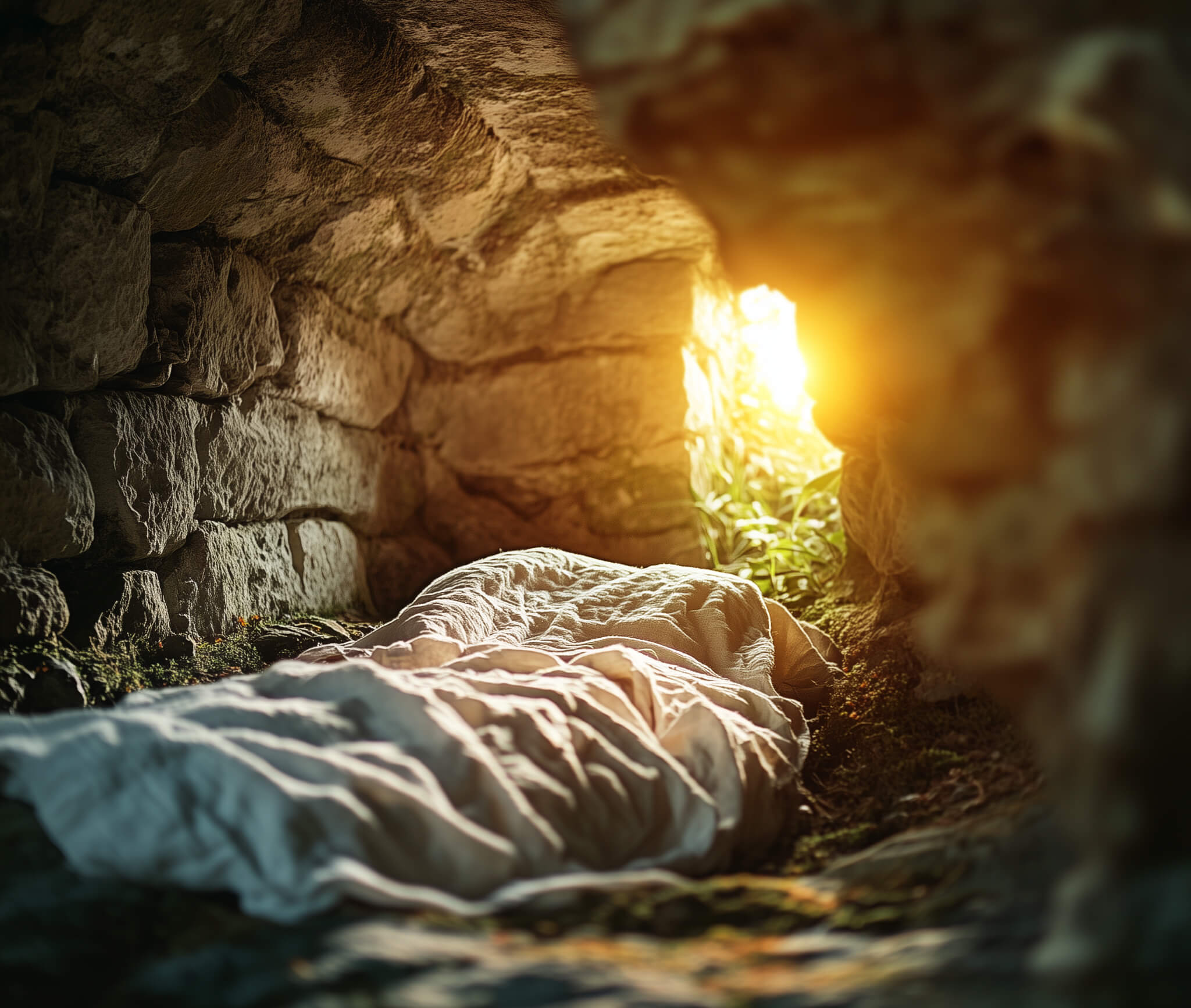
Continuity Over Centuries
For archaeologists, the importance of the find was not theological but historical.
The exposed limestone suggested that the tomb’s location had remained unchanged over time, reinforcing the idea that the site identified in the fourth century remained consistent through successive reconstructions.
Ancient cave walls preserved within the Edicule confirmed that it encloses a genuine rock-cut tomb rather than a later symbolic monument.
Historical sources reveal how the site came to be venerated. When Emperor Constantine legalized Christianity in the early fourth century, local Christians directed Roman authorities to a location buried beneath a pagan temple erected under Emperor Hadrian in the second century. Ironically, the temple’s attempt to suppress Christian worship helped preserve the site by sealing it beneath Roman construction.
Excavations in the twentieth century had revealed traces of Hadrian’s temple and parts of Constantine’s original basilica. What recent conservation work added was direct physical access to the geological features beneath centuries of architecture, confirming the tomb as an authentic first-century burial cave.
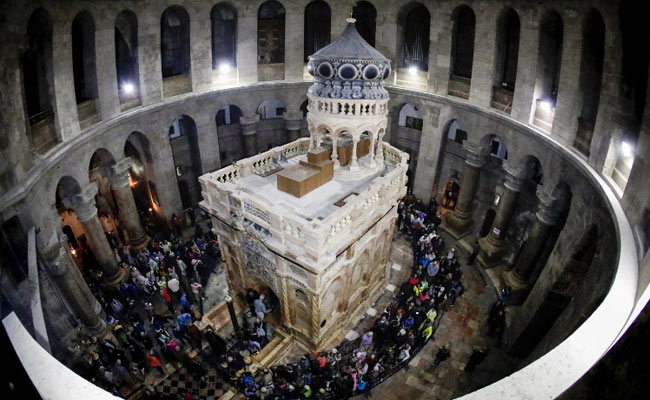
A Garden Preserved in Time
Archaeological work between 2022 and 2023, led by Sapienza University of Rome, uncovered an unexpected treasure: the remains of a cultivated garden dating back roughly 2,000 years.
Soil analysis revealed preserved pollen, seeds, olive pits, and grape remnants—clear evidence of deliberate agricultural activity. The garden’s structured planting beds and stone boundaries indicate careful, long-term cultivation.
This aligns closely with descriptions in the Gospel of John, which states that Jesus was buried in a tomb located in a garden near the site of the crucifixion. For decades, scholars debated whether this reference was symbolic or literal. The discovery of an actual, cultivated garden supports the interpretation of a real, historical landscape rather than metaphorical language.
The garden’s location also corresponds with first-century Jerusalem. Jewish burial customs required tombs outside city walls, and archaeological mapping confirms that this area lay beyond the northern boundary, functioning as a quarry that later became a burial ground.
Tombs Reflecting Historical Context
Nearby tombs carved directly into limestone exhibit design elements typical of elite burials during the late Second Temple period. Such tombs required skilled labor and resources, consistent with Gospel accounts describing Jesus’ burial in a tomb owned by Joseph of Arimathea, a man of status.
While archaeology cannot verify individual identities, the tombs’ characteristics match historical expectations.
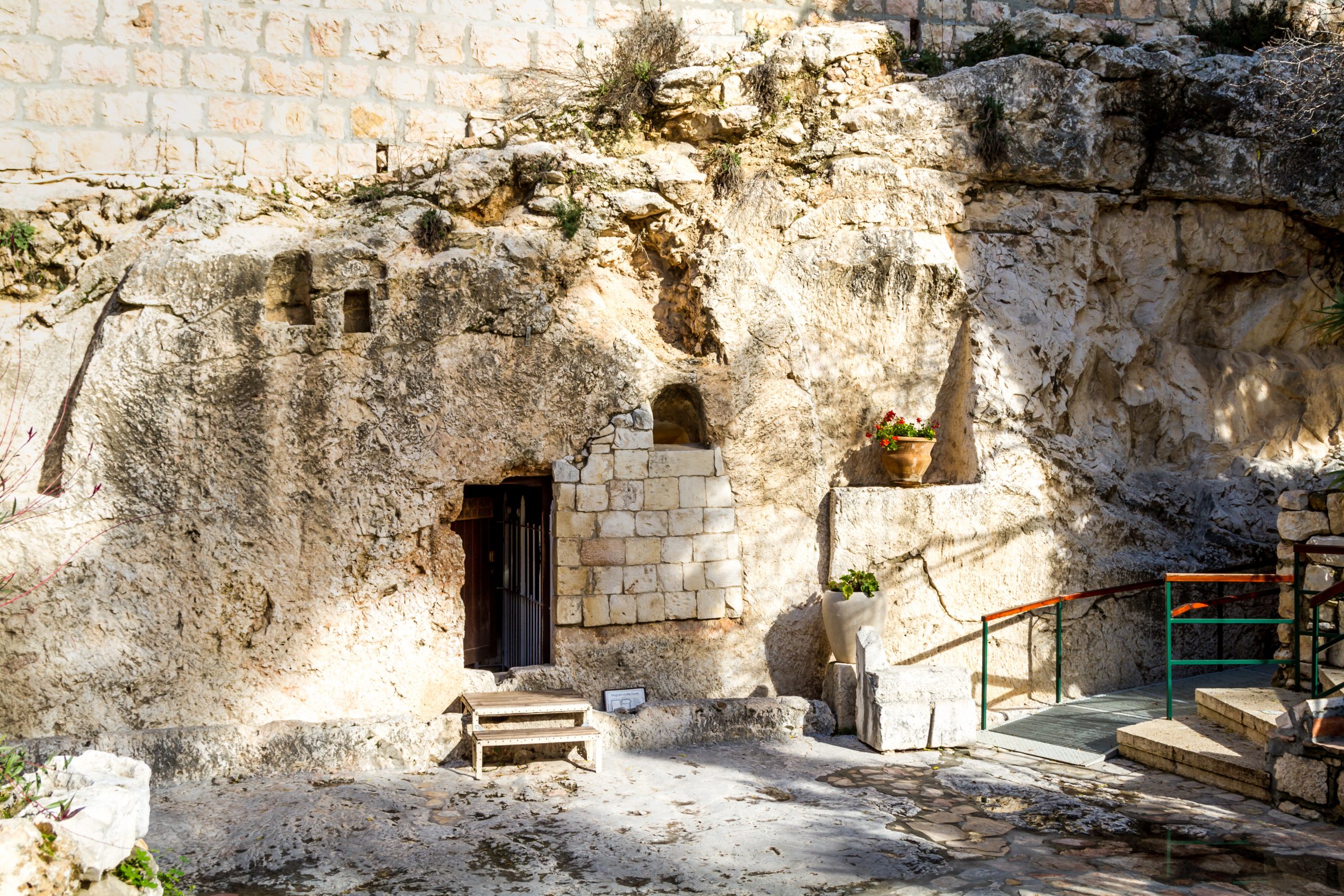
Cumulative Evidence: Building Probability
No single archaeological discovery offers absolute proof of biblical events. But archaeology builds probability through consistency.
In this case, geography, burial customs, architectural remains, and botanical evidence all converge. The site beneath the Church of the Holy Sepulchre aligns with the historical, cultural, and environmental context described in early Christian texts.
Scholars remain cautious. Archaeology cannot confirm theological claims like resurrection. But it can demonstrate whether narratives were rooted in real places and practices. On this level, the evidence is unusually strong.
Preservation Through Time
The history of the site highlights the complex relationship between destruction and preservation. Hadrian’s temple may have sought to erase Christian memory, yet it also sealed the tomb from later disturbance. Similarly, centuries of rebuilding, often seen as threats to authenticity, ultimately protected the geological features beneath.
Today, the burial bed has been re-covered for long-term preservation. Advanced imaging, 3D mapping, and material analysis have documented the site in extraordinary detail, ensuring a permanent scientific record. Conservation prioritizes protection over spectacle, securing the tomb for future generations.
Cultural and Historical Significance
Beyond academic circles, these discoveries resonate deeply.
For believers, they offer tangible connections to events central to faith. For historians, they provide rare continuity between ancient texts and the physical landscape. For the public, they serve as a reminder that ancient cities are living archives, layered with centuries of human activity.
The work beneath the Church of the Holy Sepulchre demonstrates how careful archaeology can bridge faith and history. It neither demands belief nor dismisses it.
A Layered Story of Devotion
The preserved tomb, the garden, and the surrounding burial grounds do not rewrite history—they clarify it.
They suggest that the authors of early texts described a landscape they knew intimately, anchoring sacred memory to real locations.
Beneath Jesus’ tomb lies a story of land, stone, and human devotion, written slowly across centuries. And even today, history quietly waits to be uncovered, revealing layers of continuity, faith, and care that have endured the rise and fall of empires.
