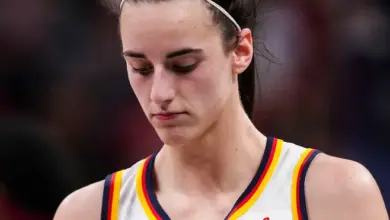
Caitlin Clark FINALLY BREAKS SILENCE On Her INJURY STATUS In Interview With Sue Bird – THIS Is HUGE!
Caitlyn Clark Opens Up About Injuries and the Harsh Realities of the WNBA
Once dubbed the WNBA’s “golden goose,” Caitlyn Clark has endured a season full of physical and mental challenges. In an in-depth interview with Sue Bird, Clark spoke candidly for the first time about the difficulties of returning from injuries and the psychological toll of sitting on the sidelines, watching her teammates play while she couldn’t participate.
Clark said:
“This has been a challenging year. I’ve had to maintain constant rehab, trust my body, but there are days that are really tough… I’ve never gone through anything like this before.”
The Grueling Injury Process
Clark’s injury struggles began during preseason, with a left quad strain that caused her to miss five games from May 28 to June 10. She then suffered a left groin injury, sidelining her for four regular-season games and the Commissioner’s Cup final from June 26 to July 5. Finally, a right groin injury from July 15 onward turned her season into a “stop-and-go” ordeal, testing her mental endurance more than her physical limits.
Clark described the strange feeling of facing injury for the first time:
“I didn’t really understand why I was hurting. I wondered if it was just tightness, if I needed rest, or if it was something normal. I’d never experienced anything like this.”
Her mother sent an emotional message reminding her:
“You’ve spent so much time for everyone else. Now, you need to take time for yourself.”
These words helped Clark realize that her health had to come first, rather than focusing solely on team or fan expectations.


Pressure From Being Absent
Clark also acknowledged that her absence directly affected her team and the league. With Clark on the court, the Fever had a record of 8 wins – 5 losses, while without her, the team went 9 wins – 9 losses. Her absence also led to lower attendance and TV ratings: the Fever–Sky game on May 17 drew 2.5 million viewers, while later games averaged around 1.5 million on ABC.
Clark explained:
“When I’m not playing, I feel the change in energy and how people follow the league. It makes you learn patience and accept the rehab process.”
The Harsh Reality on the Court
Beyond injuries, Clark faced extremely intense defensive pressure, particularly full-court tactics designed to wear her down. From constant full-court presses, traps, and angle forcing to defensive strategies targeting her movement habits, opposing teams relied on physical pressure rather than skill-based defense to limit her impact.
Clark said:
“This isn’t just about adapting to professional basketball. They develop strategies to wear me out, constant pressure. I’ve never gone through anything like this.”
Leadership and Critique of Officials
In the interview with Sue Bird, Clark also revealed another aspect of her leadership on the court. She joked but decisively remarked that she often “coaches the referees” from the sidelines:
“I think I’d make a really good referee. I wouldn’t miss any calls.”
This comment was more than a joke. It reflected her careful observation and strategic understanding, as well as her concerns about inconsistent officiating, a complaint voiced by many WNBA players.
A New Perspective on Her Role
The season’s challenges and rehab process gave Clark greater appreciation for her teammates and herself. She recognized that prioritizing her own health was critical, and her absence not only affected game results but also created opportunities for other players to step up.
Clark shared:
“When I go out to sign autographs and interact with fans, I feel their unwavering support and the support of the league. It motivates me and reminds me to be grateful for everything I have.”
Conclusion
Caitlyn Clark’s conversation with Sue Bird opened an important dialogue about:
-
Player health and safety
-
Star protection and officiating policies
-
The leadership and influence of league stars
This season not only tested Clark’s abilities on the court but also proved that a player’s value extends far beyond stats. Her honesty and openness set a new standard for player protection and advocacy in the WNBA.
The lingering question remains: Will the league make enough changes to protect stars like Clark, or will these pressures continue to repeat?