SH0CKING: Massive Hole Opens on the Sun—Earth Is Exposed to Unprecedented Danger!
On December 19th, 2024, while much of the world was distracted by the passing of an interstellar object tearing through the solar system at extreme speeds, something far more immediate was happening closer to home.
Seismometers across the western United States began picking up strange, low-frequency vibrations—vibrations that weren’t earthquakes, but unusual signals that no one could fully explain.
This was just the beginning.
By January 2nd, 2026, as reports of increasing solar activity began to flood in, it became clear that something extraordinary was happening on the Sun.
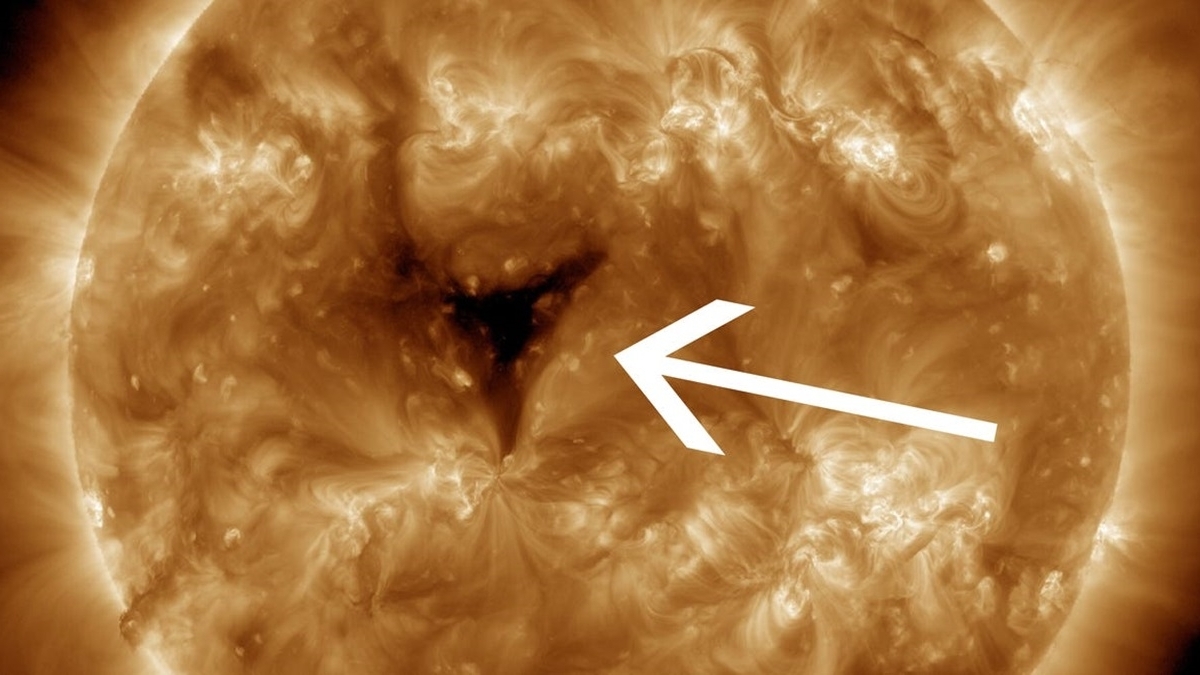
A massive hole had opened up in its outer atmosphere.





At first, it might not seem alarming.
After all, coronal holes are not new—the Sun has been experiencing them regularly for millions of years.
But this hole is different.
The scale of this hole, the way it formed, and the timing of its appearance have raised serious concerns among scientists.
A solar event like this could impact Earth’s magnetosphere and our planet’s delicate protection from solar radiation.
The Sun’s Unexpected Behavior
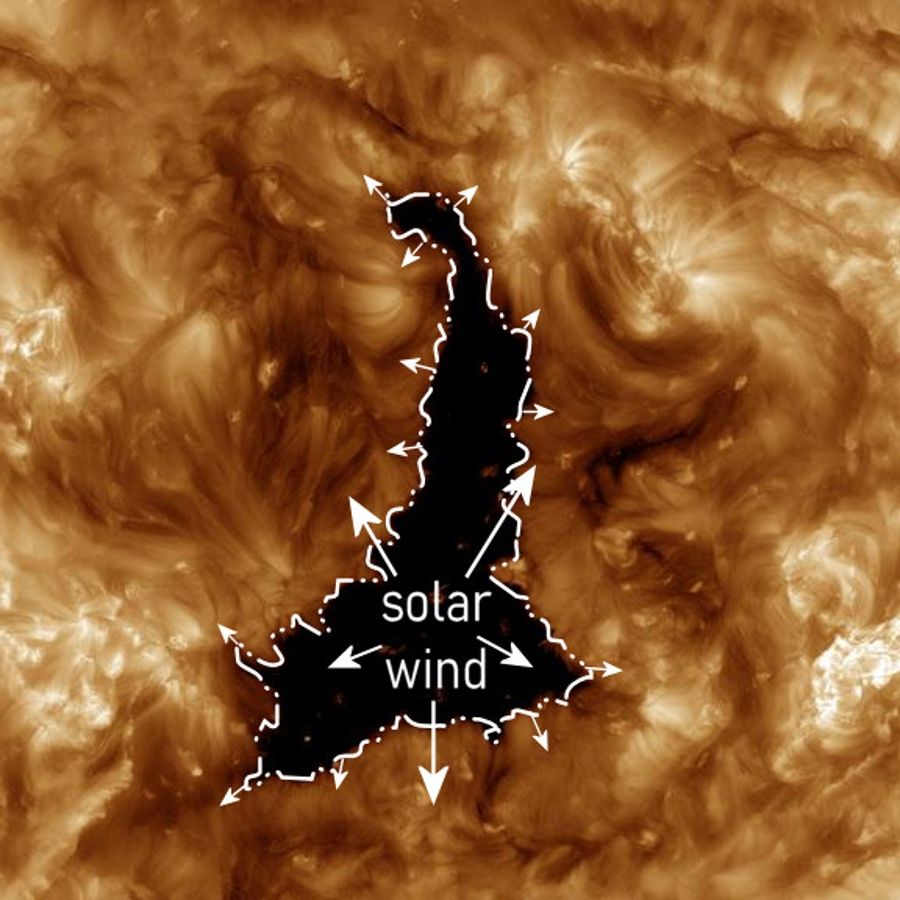
What is a coronal hole, and why does it matter? A coronal hole is a region on the Sun’s surface where the solar plasma is thinner, and magnetic field lines open outward instead of looping back to the surface.
This allows solar wind to escape freely into space.
Normally, these holes appear near the poles and last for a short time, sending solar wind that misses Earth.
However, the recent Goliath Hole—as scientists have begun calling it—doesn’t follow the typical pattern.
The Goliath Hole is not only unusually large but has formed at an unexpected time, during the peak of solar maximum, when the Sun’s activity should be chaotic and fragmented.
The hole stretched from high northern latitudes to the solar equator, covering about 20% of the Sun’s face.
This is an anomaly.
Coronal holes of this size and stability are not typical during solar maximum, a time when solar flares and sunspots are expected, not large, stable openings.
What makes this discovery even more concerning is the orientation of the hole.
The solar wind from this hole is aimed directly at Earth, and its particles will hit our magnetosphere head-on.
Normally, these solar wind streams rotate out of alignment, missing Earth, but this one is positioned perfectly to strike us.
It’s like the Sun is sending high-speed particles directly toward us, and it couldn’t come at a worse time.
Earth’s Vulnerable Magnetosphere
As we’ve learned from years of solar studies, the Earth’s magnetic field, or magnetosphere, acts as a protective shield against the Sun’s radiation.
However, recent studies show that the magnetosphere is weakening.
Over the last 200 years, Earth’s magnetic field has decreased in strength by approximately 9%, with certain areas—particularly the South Atlantic Anomaly—becoming significantly weaker.
This weakening makes Earth more vulnerable to solar radiation and increases the chances that harmful solar winds could penetrate our atmosphere.
Adding to the concern is the solar wind activity in the days leading up to the formation of the Goliath Hole.
Measurements showed that the solar wind environment was already unstable, with fluctuations in speed and density.
This is important because when solar wind pressure increases, it causes the magnetosphere to compress, and it has less time to recover.
If the magnetosphere is already under stress, even small solar events can trigger a greater response—an effect we are seeing now.
The Goliath Hole and Its Timing
So why is the Goliath Hole different from other coronal holes? There are several key factors that make this event particularly unsettling:
Size and Stability: This hole is far larger than typical coronal holes, covering about 20% of the Sun’s surface.
It has also remained stable, which is not common for such features during a solar maximum.
Orientation: The hole’s magnetic field is aligned almost perfectly with the Sun-Earth line.
Solar wind from this hole will strike Earth directly, rather than missing us.
Duration: The Goliath Hole has persisted for a longer period than scientists would expect, indicating that there’s a larger, more sustained release of solar wind coming our way.
This perfect storm of factors has left scientists concerned about the potential effects on Earth.
Solar wind hitting our planet at such an intense level could disturb our magnetic field, creating electrical currents in the atmosphere and potentially triggering geological activity like earthquakes.
It could also interfere with satellite communications, navigation systems, and power grids, leading to widespread disruptions.

A Perfect Storm: Interactions Between Space and Earth
What makes this event even more concerning is the way it connects to other phenomena in the universe.
On December 19th, 2024, an interstellar object passed through our solar system at extreme speed.
This event, although not directly related to the Sun’s activity, added a layer of cosmic disturbance that could have compounded the solar wind’s effects on Earth.
When interstellar objects pass through the solar system, they can disturb the plasma environment in space, creating a ripple effect.
This can alter the conditions in Earth’s magnetic field, making it more susceptible to external forces, like the solar wind from the Goliath Hole.
The Bottom Line: We Need to Be Ready
What does this all mean for us? The Goliath Hole represents a serious solar event, and its timing, size, and orientation make it particularly concerning.
While solar activity like this is not unusual during solar maximum, the combined effects of this coronal hole, the weakening of the magnetosphere, and the general instability in space weather make this situation worth monitoring closely.
We may not yet fully understand the long-term effects, but we do know that the magnetic shield around Earth is already under stress, and an event like this could further exacerbate that vulnerability.
As we move forward, it’s crucial that space weather agencies, scientists, and global leaders pay close attention to these events and work together to prepare for the possibility of disruptions in technology, power grids, and communication systems.
This event serves as a reminder that even with all the technological advancements we’ve made, the Sun still has the power to shape life on Earth in ways we cannot fully control.
And in the coming years, as we continue to monitor the Goliath Hole and other solar activity, we may find that the universe is still full of surprises—some that we are only just beginning to understand.
As this story unfolds, one thing is clear: we are facing unprecedented challenges from the very forces that sustain our planet.
And how we respond will determine our ability to weather the cosmic storms that lie ahead.
