Scientists Opened Jesus’ Tomb—and What They Found Beneath It SHOOK History to Its Core
A Night Unlike Any Other
The night of October 26 carried an unusual weight within the Church of the Holy Sepulcher.
Long after the crowds had faded and Jerusalem’s Old City settled into its uneasy quiet, a team of scientists and conservationists from the National Technical University of Athens prepared to do something unprecedented. They were about to open the Edicule—the small shrine enclosing the tomb believed by millions to be the burial place of Jesus Christ.
No cameras flashed.
No crowds cheered.
Only gloved hands, controlled breaths, and the silent pressure of centuries pressing down on every movement.
The marble cladding, in place since at least 1555, had protected the tomb through wars, earthquakes, fires, and repeated reconstructions. Over time, scholars wondered if the original burial bed had survived at all—or if it had been shifted, altered, or replaced. Faith insisted it was still there. Science, however, remained cautious.




Uncovering the Past
As the marble was carefully removed, the initial discovery was disappointing. Beneath it lay only fill material—loose stones and mortar—seemingly confirming the worst fears. For a moment, it appeared the past had been erased.
But the team pressed on. For sixty relentless hours, they worked around the clock, peeling back layers laid down by time, empire, and devotion.
Then, beneath the rubble, a second slab appeared, etched with a faint cross. The mark was subtle, almost shy, but unmistakably intentional. This was no random stone. The tension in the room was palpable.
Finally, just before the tomb was resealed on October 28, the original limestone burial bed was revealed—intact, unmistakable, and undeniably ancient.
This was not treasure or relics. It was something far heavier: proof.
Frederick Hiebert, National Geographic archaeologist-in-residence, stood over the exposed limestone, struggling to steady himself. “I’m absolutely amazed,” he said, voice trembling. “My knees are shaking a little because I wasn’t expecting this.”
For decades, scholars debated whether this sacred location still aligned with its original position. Now, stone beneath their hands confirmed it: the tomb had not moved.

Ancient Walls, Living History
The surprises did not end there. Behind the Edicule’s walls, researchers confirmed that the ancient limestone cave walls were still standing. A small window in the shrine revealed raw rock—untouched, unfiltered, finally visible after generations.
“This is the holy rock that has been revered for centuries,” said Professor Antonia Moropoulou, the project’s chief scientific supervisor. “But only now can it actually be seen.”
Revered yet unseen. Known yet hidden.
Skeptics questioned: what if Jesus’ true resting place lay elsewhere? Archaeology, however, began answering. The Gospels describe a burial outside the city walls, in a rock-cut tomb owned by a wealthy follower, Joseph of Arimathea. Critics had dismissed this as symbolic, but archaeology confirms that first-century Jewish tombs often featured long carved niches, aligning precisely with the biblical description. Geography reinforced the story: at the time, the site lay outside Jerusalem, as required by Jewish burial law.
Constantine and Preservation
In the fourth century, Emperor Constantine sent his mother Helena to locate the tomb of Christ. She was directed to a Roman temple built by Emperor Hadrian nearly two centuries earlier—likely meant to suppress Christian worship. Ironically, this attempt at erasure preserved the site. Excavators found a rock-cut tomb beneath the temple ruins. Its roof was removed, and a church was constructed around it.
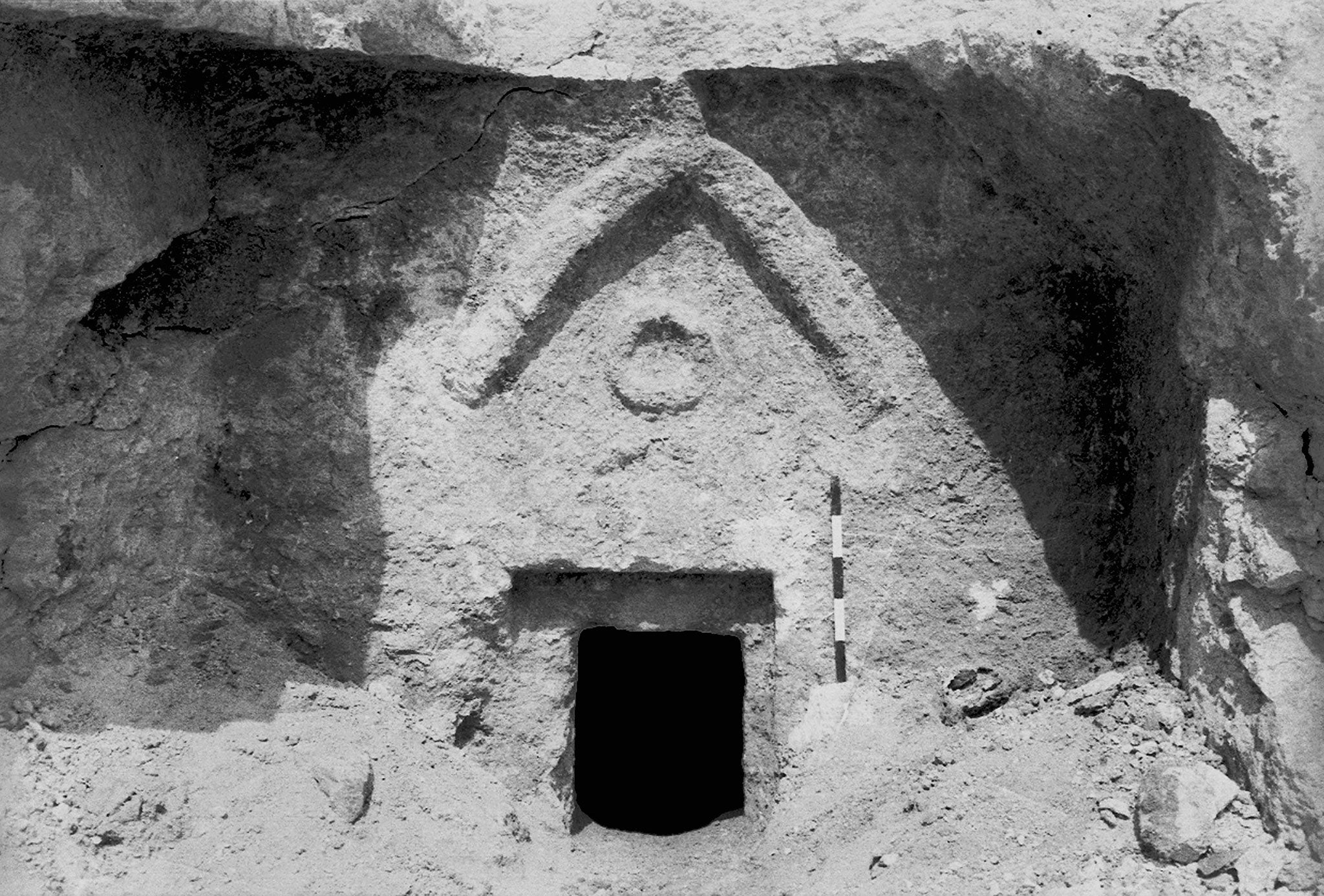
Over the centuries, the church faced destruction, rebuilding, and restoration, yet the rock endured. Twentieth-century excavations uncovered Hadrian’s temple, remnants of Constantine’s church, an ancient limestone quarry, and multiple first-century tombs nearby. Archaeologists saw a pattern: this was no coincidence. It matched the Gospel description of a Jewish cemetery near the crucifixion site.
Dan Bahat, former city archaeologist of Jerusalem, summarized: “We may not be absolutely certain, but we have no other site with a claim nearly as weighty.”

Documentation and Early Reverence
Before resealing the tomb beneath marble, experts meticulously documented every millimeter: scratches, graffiti, and inscriptions. Archaeologist Martin Biddle emphasized the significance of these markings, which reveal how ancient people understood and revered the site. Nearby tombs display early crosses and inscriptions, indicating intentional selection rather than error by early Christians.
A Garden Frozen in Time
Even more remarkable, 2022 restorations revealed a 2,000-year-old garden beneath the church floor. Olive pits, grape seeds, preserved pollen, planting beds bordered by stone—all pointing to intentional cultivation. Beneath the garden lay additional rock-cut tombs.
Suddenly, the Gospel of John’s words resonated in new ways: “Now there was a garden in the place where he was crucified, and in the garden a new tomb.” For centuries, scholars debated symbolic meaning. Now, the soil itself confirmed reality.
The garden and tombs matched the description perfectly: outside city walls, near the crucifixion, suitable for a hurried burial before the Sabbath. Even the vegetation echoed biblical symbolism: olives for peace, grapes for covenant and life. Hadrian’s attempt to erase memory had inadvertently sealed the site, preserving it like a time capsule.

History That Refuses to Stay Buried
This discovery does not end debate. It does, however, shift it. Faith is no longer standing alone. It is standing on limestone, pollen, tombs, and geography. Beneath Jesus’ tomb, scientists found no golden miracles—only something more profound: history itself, preserved and unyielding.
Stone, soil, and silence now speak louder than argument ever could.
