Jesus’ Face REVEALED! Scientists Finally Prove Greatest Miracle Ever!
A shocking new discovery about the Shroud of Turin has recently rocked the scientific and spiritual communities.
For centuries, the Shroud has been debated, with skeptics challenging its authenticity.
But now, groundbreaking evidence has emerged, revealing new details that might just change everything we know about Jesus Christ and the resurrection.
Could this cloth, long thought to be a medieval forgery, actually be the true burial cloth of Jesus? Let’s dive into the new revelations that are shaking the foundations of both science and faith.





The Mysterious History of the Shroud of Turin
The Shroud of Turin is believed by many to be the burial cloth of Jesus Christ, bearing an imprint of His body after the crucifixion.
While the Shroud’s origins have long been debated, the earliest historical records place the Shroud in France during the 1300s.
The Shroud was eventually moved to Turin, Italy in 1578, where it has remained since, carefully preserved by the Catholic Church.
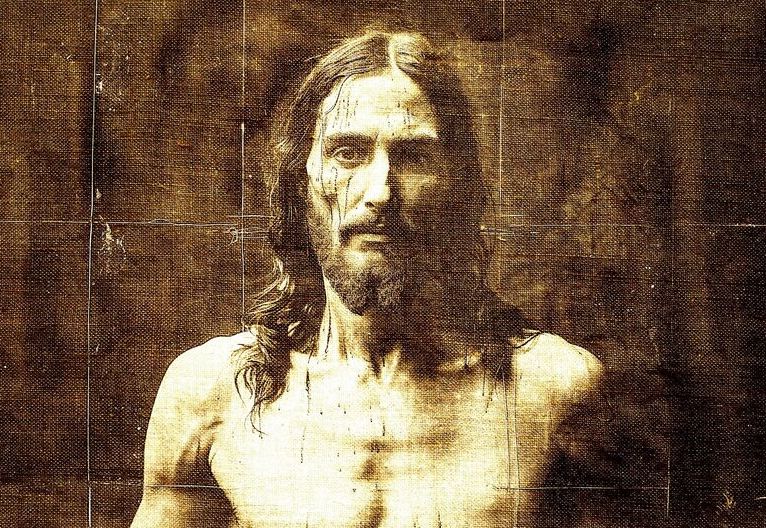
The Shroud itself measures about 14 feet in length and 3 feet in width and shows the faint image of a bloodied, crucified man, widely believed to be Jesus.
In 1898, Sak Piia, an amateur photographer, took the first photographs of the Shroud and was stunned to discover a clear image of a man who appeared to be dead, with his arms crossed and eyes closed.
The image, eerily similar to traditional portraits of Jesus, sparked renewed interest in the Shroud’s authenticity, and questions about its origins began to grow.
The Carbon Dating Controversy
In 1988, the Shroud of Turin underwent carbon-14 dating tests to determine its age.
The results suggested that the Shroud dated back to the Middle Ages, specifically between 1260 and 1390 A.D., casting doubt on its claim to be the actual burial cloth of Jesus.
This conclusion seemed to silence many believers, as it contradicted the long-held belief that the Shroud dated to the first century.
However, these results were met with skepticism by many, especially as further scientific investigations and new evidence began to surface.
New Evidence: The Shroud’s Age and Image
Despite the carbon dating results, new research has emerged that challenges these conclusions.
Recent studies have reaffirmed the Shroud’s authenticity, using non-destructive testing methods such as wide-angle X-ray scattering.
These new findings suggest that the Shroud’s linen dates back to the first century, aligning with biblical descriptions of Jesus’ crucifixion and burial.
In addition to the age of the Shroud, scientists have been baffled by the image that appears on it.
The figure on the Shroud matches biblical accounts of Jesus—a man who was scourged, crucified, and pierced by a spear.
The anatomical accuracy of the image has left medical experts astounded, as it is anatomically flawless, showing a perfect representation of a crucified man.
The Resurrection and the Mysterious Image
What makes the Shroud even more incredible is the image’s origin.
Scientists have struggled to explain how the image was created, as it cannot be reproduced using any known methods.
Isabelle Pizza, a world-renowned expert in figurative art, has stated that the Shroud is the most anatomically correct image of a human body ever created.
The imprint on the cloth is unlike any painting or forgery ever attempted—leading many to suggest that it was created by a supernatural event.
Some researchers believe that the image was caused by a burst of light or radiation that imprinted the perfect image of Jesus’ body on the cloth.
This burst of energy could only be explained by the resurrection described in the Gospels, where Jesus’ body is said to have transcended physical constraints.
Could the resurrection of Jesus have left behind this miraculous imprint as proof of His divine power?

The Controversial Carbon Dating Results
The 1988 carbon dating tests have been heavily criticized, as they only tested a small section of the Shroud, which some argue was contaminated during repairs in the 16th century.
After further investigation, the carbon dating results were called into question, with many scientists now suggesting that the tests were flawed.
The new data, based on cellulose degradation in the Shroud, points to an age of approximately 2,000 years, aligning with the first century and confirming the Shroud’s authenticity.
The Shroud’s Impact on Christianity
The Shroud of Turin is not only a historical and scientific puzzle but also a deeply spiritual symbol for Christians around the world.
For centuries, the Shroud has been considered a sacred relic, venerated as the clothing that wrapped Jesus after His death and burial.
For many believers, the Shroud is a physical testament to the resurrection of Christ and His divine sacrifice for humanity.
The new findings about the Shroud’s authenticity have reinvigorated faith in its significance.
For Christians, the Shroud is a powerful reminder of Christ’s suffering and resurrection—a symbol of the living God who conquered death and offers salvation to all.
Conclusion: The Shroud’s True Purpose
While the Shroud of Turin has faced much criticism and skepticism over the years, recent discoveries are challenging the narrative that it is just a medieval forgery.
With evidence pointing to its first-century origins and the supernatural characteristics of the image, the Shroud of Turin stands as a testament to the resurrection of Jesus Christ—a miracle that defies all logical explanation.
Whether you see it as a relic of faith or scientific proof, the Shroud of Turin continues to inspire awe and wonder, confirming the truth of the Christian faith for millions around the world.
As science and faith continue to intersect, the Shroud remains a profound reminder of Jesus’ life, death, and resurrection.
