“This Is WAY Worse Than We Thought…” — Graham Hancock Drops Bombshell About a Lost Civilization Hidden in Turkish Cliffs
The Lycian Tombs: A Forgotten Civilization’s Dark Secret
When Graham Hancock took the stage for his latest live event, no one could have anticipated that he would unravel the forgotten legacy of the Lycian civilization—an ancient culture long relegated to the shadows of history.
The audience had expected the usual: enigmatic ruins, ancient myths, and provocative theories. But what Hancock presented was something entirely different: a chilling narrative of deliberate erasure, suppression, and the unsettling possibility that an advanced civilization may have been intentionally silenced. The Lycian people, he suggested, might hold the key to rewriting our understanding of human history.
The Ancient Tombs of Lycia: Echoes of Erasure
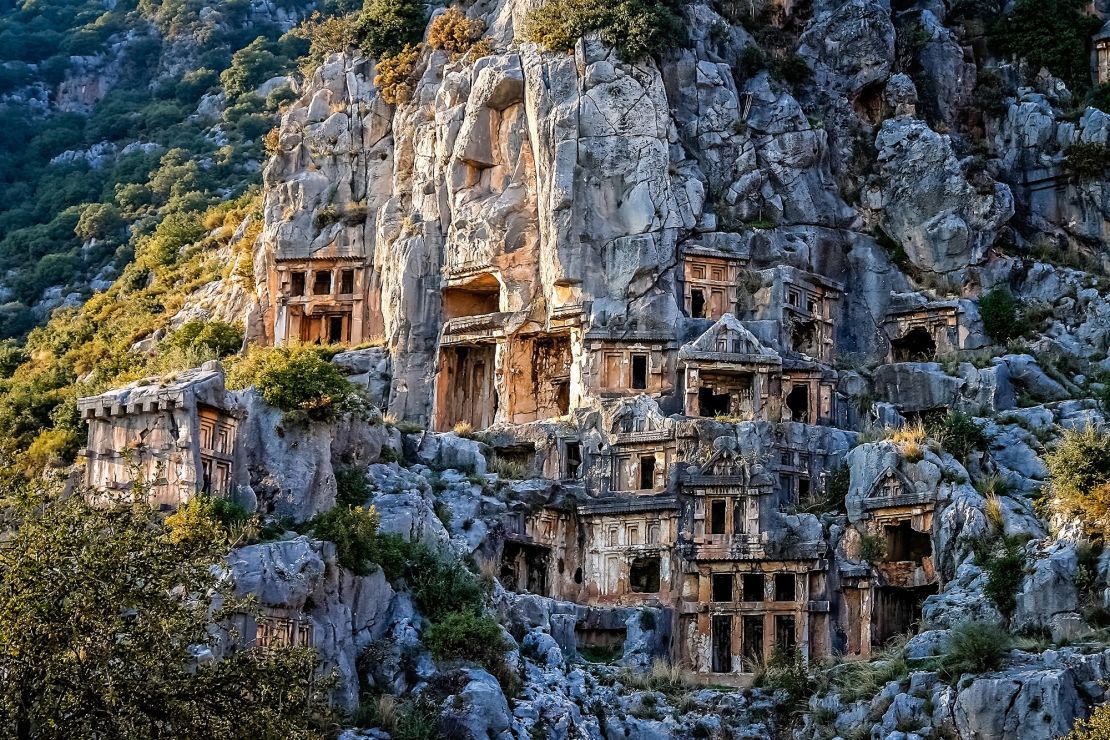
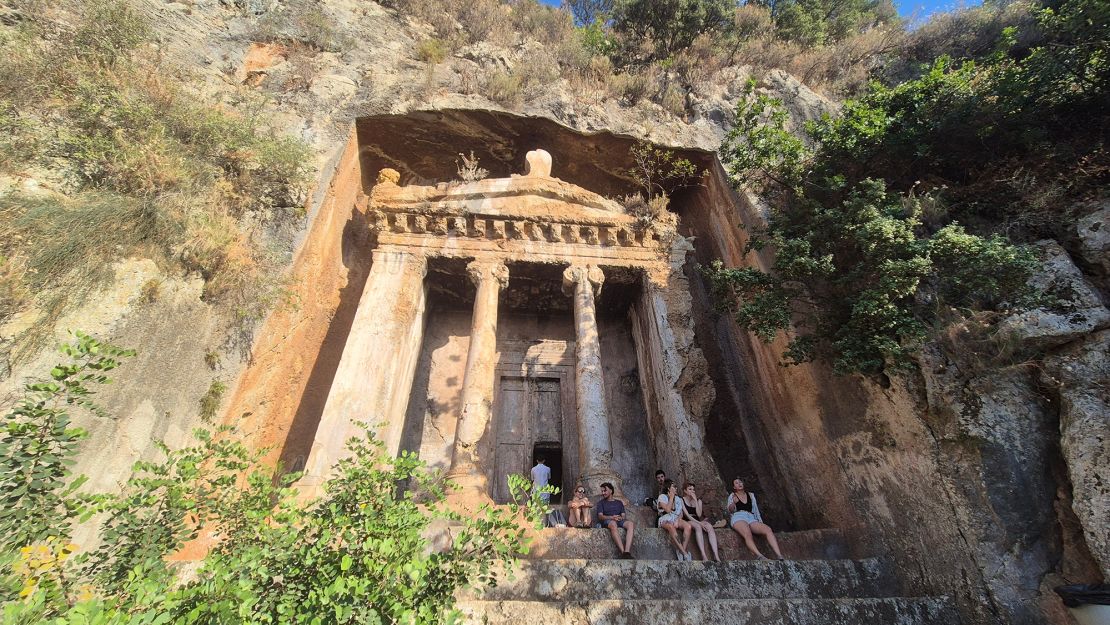
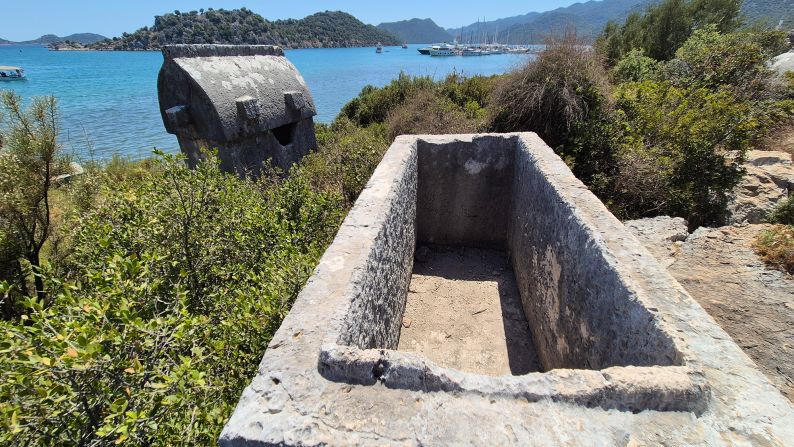
Hancock’s talk focused on the southwestern coast of Turkey, a region often overlooked by mainstream archaeology. Behind him, images of Lycia’s haunting tombs flashed across the screen—tall sarcophagi perched high on stone pedestals, tombs carved directly into sheer cliffs, and stone structures that resembled houses for the dead, their blank faces staring out across time. These structures were familiar to scholars, yet Hancock’s interpretation cast them in an entirely new light.




What made Hancock’s presentation so unsettling was his assertion that the Lycian civilization wasn’t just advanced—it may have inherited its architecture, governance, and spirituality from an even older civilization, one that had been intentionally forgotten. The tombs at Myra and Xanthos, built at seemingly impossible elevations, demanded attention, yet offered no answers. Why were they built so high? And what did these tombs, with their eerily global architectural parallels to Peru, Egypt, and India, really signify?
A Pattern of Destruction: Fire and Silence
Hancock’s focus shifted from the physical structures to their destruction. Lycia, he pointed out, didn’t just face conquest; it faced obliteration. The Persian, Roman, and Alexander the Great’s armies all came through, but Hancock argued that their occupation was not simply military—it was systematic destruction. He highlighted the repeated sacking of Xanthos—first by the Persians, then by the Romans—where entire populations chose death over surrender. Fires consumed not only buildings, but libraries, inscriptions, and cultural knowledge.
“This isn’t a coincidence,” Hancock said, his voice filled with intensity. “This is a pattern. Across the world, every ancient site that shows signs of advanced knowledge—fire, conquest, and silence.”
But it wasn’t just the physical destruction of cities that bothered Hancock; it was the systematic removal of the written word. The Lycian people had a trilingual stele, inscribed in Greek, Lycian, and Aramaic—offering a key to understanding their civilization—but much of their language remains untranslated. Hancock’s chilling conclusion was simple: “They didn’t leave too little. Someone took too much.”
The Weight of Hancock’s Revelation
The crowd was electric, but the tone was also unsettling. Hancock’s personal reaction during the talk—when he paused and muttered, “This is way worse than I thought”—stirred a sense of unease in the room. He wasn’t referring to the state of preservation or the destruction of the tombs; he was pointing to something deeper. Hancock had come to realize that the suppression of the Lycian civilization’s memory was not just a matter of historical neglect—it was an active erasure. These tombs, with their strange, elevated positioning, weren’t merely the homes of the dead. They were perhaps beacons or markers of a civilization that had been deliberately silenced by those in power.
The Rise of New Theories: Lycia’s Forgotten Legacy
As soon as Hancock’s words hit the airwaves, theories began to circulate. Supporters quickly connected the Lycian tombs to mythological traditions from other lost civilizations, linking them to ancient maritime networks, pre-Ice Age cities, and submerged knowledge. The matrilineal inheritance system of the Lycians—where power flowed through women, a system rare in most ancient societies—was also pointed to as evidence of a lost, more egalitarian world order.
But the skepticism from academics was immediate. Archaeologists quickly dismissed Hancock’s claims as sensationalist and selective. They argued that Lycian history was well-documented through foreign records, from the Egyptians to the Greeks. The tombs, they said, were simply local innovations, not evidence of a global conspiracy. The gaps in language? A common issue in ancient cultures, not proof of censorship.
Despite the academic pushback, the narrative Hancock presented spread rapidly. The core of his argument wasn’t a set of facts, but a question: What if our oldest known civilizations weren’t the first?
A Global Pattern of Loss
For Hancock, the Lycian story was part of a much larger, global pattern. Across the world, he suggested, advanced societies with astronomical alignments, sophisticated architecture, and complex spiritual systems had risen, only to be destroyed. What if the tombs at Myra and Patara, those eerie, elevated houses of the dead, were not just funerary art but remnants of a lost global civilization?
As Hancock’s presentation ended, viewers didn’t just click away—they lingered, revisiting the tombs, taking screenshots, and debating the meaning of the inverted boat-shaped sarcophagus lids. A strange silence hung in the air. There were more questions than answers. How could a civilization with such advanced knowledge have left behind so few written records? And why were the few that remained seemingly erased?
Tourism to the Lycian region surged immediately after Hancock’s event. Local guides at Myra and Patara found themselves answering questions about Graham Hancock instead of Alexander the Great. Tourists stood in front of the cliffside tombs, asking, “Why here? Why up there?” as if the stone itself might hold the answer.
The Silence Continues
Back in the academic world, the debate deepened. Some scholars dismissed Hancock as fueling fringe mythology, while others admitted that the renewed attention on Lycia was welcome. For decades, the Lycian civilization had been a footnote in the study of the ancient world, overshadowed by Troy and Ephesus. Now, it was front-page news, and for the first time, it was being seen as more than just another forgotten culture.
Hancock hasn’t elaborated further on his final remarks. His words—“This is way worse than I thought”—have since been dissected in blogs, podcasts, and academic classrooms. What did he mean? Worse for whom? And what did he see that made him so unsettled?
The real question now is not just who the Lycians were, but who came before them—and what happened to them. Because if their tombs are remnants of something older, then the true history of the world may be buried far deeper than anyone has dared to dig.
For now, the tombs remain silent, their stone faces watchful, glowing under the Turkish sun. The secrets of Lycia are still waiting to be unearthed, and as Hancock’s revelations continue to ripple through the world, one thing is clear: the real history of the world may still be hidden beneath our feet.
